Few could walk my path, for it is soft as a petal, yet cruel as death.
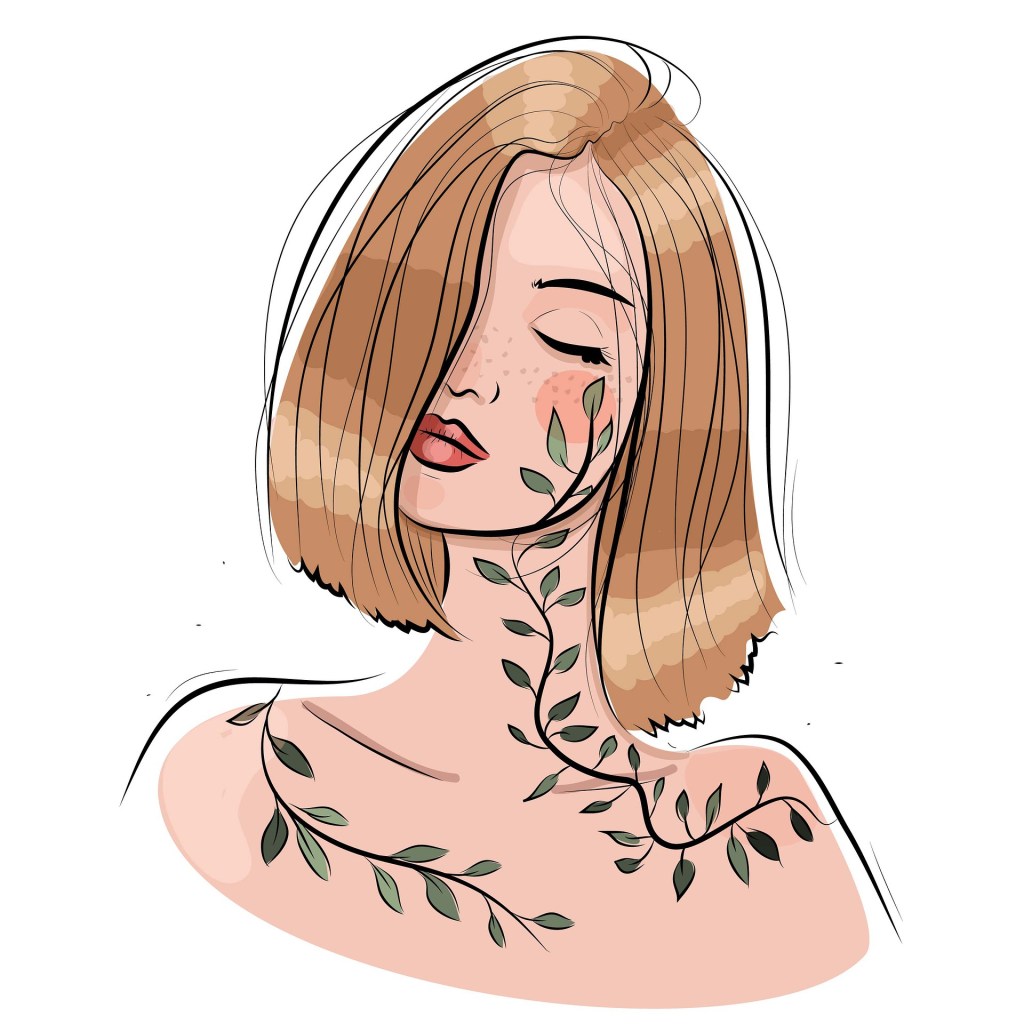
I have not been completely honest with everyone, including myself–I have tried to bypass and pretend, to keep my smiling mask in place. I wanted to be perfect like everyone perceived me to be; that the bad things, the whispers, the rumors, did not scar me. I did not want anyone to see the vines of thorns constricting me. Be better, you are fine, keep going, don’t stop all things that whispered in the back of my head while I tried to slog through a mess. I thought that if I just ran a little faster, smiled a little wider, or posed just right then maybe I would believe the lies I was telling everyone else. That is when Persephone found me. She saw me crouched over the shattered pieces of my mask trying to put all the pieces back into the original form before anyone noticed. She knelt down with me and pulled my hands away from the shards before I could cut myself. Together we looked over what I would call my brokenness, my lack of perfection. She told me that this is just a phase–that by virtue of a woman’s natural cycle, we each have the capacity to morph and flow through life in such cycles. It is when we pressure ourselves and perceive pressure from others that we try to control the flow, that is when we fall. Life is a cycle where we go from the time of our safe meadows to uncharted underworlds, and then back again. We cannot bypass an underworld by sprinting to a new meadow. Persephone’s story and wisdom can guide us through this.
An Ode to Persephone
When we think of Persephone there are a few things that might ping in your memory. She is the wife of Hades, daughter of Demeter, maiden of spring, queen of the underworld. All of these qualifiers are true, but when we look at the myths her story is not truly her own.She is revered by some, pitied by others, and misunderstood by even more. *I need to pause briefly here to put a trigger warning for mentions of abduction, rape, and sexual assault*
One day Persephone was picking flowers with her friends. She was dazzled by a narcissus flower and reached out for it when suddenly, Hades erupted from the earth, snatching her away and taking her deep to the Underworld. Persephone screamed and “…cried with a piercing voice,” (“Homeric Hymn” line 20). This version, as the “Homeric Hymn to Demeter” tells us is the most common and agreed upon story of Persephone, however this is not even her story.
When Hades takes his bride to the Underworld, Persephone’s mother, wreaks havoc on Earth refusing to allow any crops to grow and killing many mortals. The entire mid-section of the hymn details Demeter’s journey to find her daughter, but leaving out the crux of what happens to Persephone below. Writers have filled in the blanks on these events based on the nature of her entrance to the Underworld (i.e. assault, coercion, rape). A.E. Stalling’s poem, “Hades Welcomes His Bride” offers a dark and chilling account of what she endured. However, we cannot truly know what Persephone went through as she never tells her side of the story. Instead, her agency is further reduced until she is a victim, a helpless maiden. I do not aim to discount her suffering, rather I hope to empower her to share her story and her tools for self-empowerment in darkness. As the author Ellie Mackin Roberts writes in her (2020) novel Heroines of Olympus, “In her journey from barren, aggrieved and grieving maiden to ruler over the dead, Persephone was an emotionally complex goddess who is often reduced to the title of Hades’s wife or Demeter’s daughter” (p. 181). From her journey into her own sovereignty, we can glean some guidance–no matter who tries to tell your story or take your power, so long as you know your story you will never lose yourself in the Underworld.
This is merely an introduction to Persephone and the stories she has to tell. As I process more with her I will share with you all.
***Trigger warning: brief mention of sexual assault
When the Supreme Court overturned Roe v. Wade I, like so many were gutted. Something as simple as choosing what goes on inside your body was now vulnerable, if not outright banned. I’m lucky, I live in New York which is a blue state, so my right to choose will likely not be revoked, but I am a minority. For so many women they have been reduced–their independence, their sovereignty disrespected. Yet again women are deemed less than; that they cannot make decisions for themselves. As a Lilith devotee I am outraged for my fellow women. Have we not fought tooth and nail to be treated even slightly equal as men? Have we not proven that we can “handle” ourselves? Again patriarchy needs to put women back under their rule.
Yes I am pro-choice. The choice to have an abortion is the choice to not be pregnant, to not bring life into this world, to honor yourself as a human being. In the case of tragedies and injustices of sexual assault, incest, and abuse, the punishment should not rest with the women should she become pregnant. Those who endure these traumas and find a lingering presence should be able to reclaim their stories. To me that is what being pro-choice means: the choice to write your own story; the right to control the way your life unfolds.
Those who argue against that choice claim that it is murder. That is one way to read that story, but I would counter that forcing someone into motherhood is it’s own kind of murder. Motherhood is an identity that many are privileged to don, but it can smother the woman who came before. That kind of shift in a story cannot be taken lightly and therefore should not be forced. It should be celebrated.
This contemporary moment holds so much fear. Project 2025 and conservative politicians hope to fully ban abortion, restrict birth control access, track reproductive health, and more. This would effectively plunge the US to Gilead. Our authorship over our lives would not be our own in this world; we would be at the mercy of those in power.
Life is a story that we get to write. There are so many turns it can take and combinations of plot points. To be in charge of your own story is to be human. If women cannot choose to whether bring a new character (a child) into their story or not then they are not human.
We are not goddesses or matriarchs or edifices of divine forgiveness; we are not fiery fingers of judgment or instruments of flagellation; we are women forced back always upon our woman’s power
Audre Lorde “Uses of Anger”
The quote above comes from one of my favorite Audre Lorde essays. In “that “Uses of Anger” she argues that anger is a powerful force of energy that creates change. As Lorde explains, anger is a legitimate response to societal injustices and should be understood as such. Feminist scholar Sara Ahmed argues something similar with her term “feminist killjoy. Ahmed’s essay imagines someone pointing out a moment of sexism and racism (i.e., a joke) and being labeled a killjoy. Ahmed argues that yes, being a feminist means killing other people’s joy, but in the name of equality. The path of a killjoy ties into Lorde’s belief of anger as power. Situations of inequality and oppression create anger in the people who are paying attention. Still, those angered souls have to brave the resistance from others who would call them killers of joy. If anger is power for change, why are angered women often written off as ‘having a moment?’ If our society has come so far in the name of equality, why are feminist killjoys ostracized for calling for change? An angry woman is just another term for a madwoman. It’s maddening to see the world through this lens, but it is a long-lived reality. Euripides’ play Medea can be read as a document of both the ancient past and a present representation of the struggles of modern madwomen. Traditionally, it is a play about revenge and morality. I want to complicate that view and argue that Euripides’ play shows women’s unequal role and calls for radical change. The insane crimes that Medea commits are unredeemable for any reasonable person. Still, audiences are not meant to forgive her for her murders, only understand the position she was in and empathize. For its purposes here, Medea’s plight and the subordinate role of women in society is not a bygone relic of the ancient past.
Brief Exposition to Euripides’ Medea
A brief exposition of Jason and Medea would be helpful here, as its original audiences would have already been familiar with the connected myths before seeing the play. Jason’s father was the king of Iolkos, who was tragically killed by his brother Pelias. Jason’s mother hides him away before he, too, can be killed. Jason grows and trains, planning to return to Iolkos and challenge his uncle for the throne. When he arrives in Iolkos to avenge his father, Jason is tasked with finding the Golden Fleece. If he can return with it, Pelias will give him the throne, and Jason will have avenged his father’s death. What follows is a series of adventures that are too long to detail here. If you want the whole story, I recommend this episode of the podcast “Let’s Talk About Myths Baby,” created by Liv Albert, or read this brief PBS article. For this blog, all you need to know is that Jason recruits Medea to his crew, where she plays a critical role in Jason’s success. I would like to point out that her love for Jason led her astray; he talked a big game as a great hero, yet it was Medea who actually slew the serpent guarding the Fleece. Euripides does mention some of these events in Medea’s argument with Jason, including some of the horrible things she had to do to help her lover succeed. Medea deceived her father and allowed the murder of King Pelios by his daughters (Medealines 483-487). They find the Fleece, and Jason takes his throne, and they are presumably happy for a while. However, the locals dislike Medea’s status as a foreigner and her magic and run Jason and Medea out of Iolkos. The play begins after Jason, Medea, and their children have settled in Corinth. As the play unfolds, audiences watch as Medea takes her predicament into her own hands. She is a master at calculating and assessing risk as she constructs her revenge.
Medea Deranged Murderer or Feminist Killjoy?
Some have called Medea’s character “deranged and vengeful” (Hart), but that is precisely why I am drawn to her. Medea is a perfect combination of both types of madwomen: the insane one and the angry one. I want to focus on the cause of her deranged behaviors: anger. Her anger at the patriarchal forces in her life turns her to act in what a reasonable person would consider unstable ways. Murdering your husband’s new wife, her father, and then your two children is not what any reasonable person would consider sane. But if we really look at what Medea is communicating to us as modern audiences. She is mad, wholly and righteously, because of her place in a man’s world. If we consider anger as a legitimate response to injustice, then we would consider Medea’s anger at Jason’s betrayal reasonable. I am not arguing that murder is the answer to injustice but that Euripides’ play is a dramatized depiction of a woman responding to the unjust world around her. Medea’s righteous anger flows freely throughout the play; the word “rage” is repeated by the Nurse and the Tutor in reference to Medea’s emotional state quite frequently in the opening pages. The Nurse frets, “She’ll not relax her rage till it has found its victim. God grant she strike her enemies and not her friends! (lines 94-95). What Medea does with her rage, I think, is truly brilliant. To go back to “Uses of Anger,” Lorde writes that when anger is “focused with precision, it can become a powerful source of energy serving progress and change” (127). Medea’s anger is such a source of energy that she inspires the Chorus of Corinthian women to call for a gender recast. Yes, she is a murderer; she is a madwoman, there is no denying that. But consider that by the end of the play, she appears in a chariot pulled by dragons that carry her away. This is remarkable because a typical Greek play would have one of the gods coming out and setting everything right. But they don’t, showing that the gods are at ease with Medea’s actions.
Medea’s anger has been established, as is what she does with her anger, but what of Jason, the once-great hero? In today’s vernacular, we would consider Jason’s behavior as gaslighting. When Medea points out all she has done for him, he claims that it was not her doing but Aphrodite’s. Aphrodite made Medea fall in love with him, so everything she did out of love for him was caused by Aphrodite. Medea rightfully calls him out on that point. He even has the audacity to tell her to calm down. Jason says to her, “–you’ll change your mind and be more sensible” (lines 629-630). Jason’s behavior is just one in a long line of men then and now that have disregarded a woman’s argument because she was too emotional. The relationship between Medea and Jason in this play aligns itself nicely with the double-standard of anger between men and women. To historicize my argument, “within the long history of western civilisation, women’s anger has been construed as deviant, monstrous or otherwise taboo…” (Jilly Boyce Kay “Introduction: anger, media, and feminism: the gender politics of mediated rage” 591). Female anger is often seen as a sign of immaturity or unreasonability, but a man’s anger is justified as a sign of masculine power.
If you are looking for a modern example of this divide, I would guide you to the Brett Kavanaugh Senate Judiciary Committee hearings when he was accused by Dr. Ford of sexual assault. In this example, one of many, I would add, Justice Kavanaugh is seen having his moment. He is angry: cries, and shouts, all in the name of what he calls “a calculated and orchestrated political hit.” In other words, his anger is fueled by an injustice he feels was committed against him. Instead of disqualifying him for his emotional outburst, Kavanaugh was supported and protected. For a white man, anger is considered an emotion of power, but if Dr. Ford had given her testimony with the same level of emotion, she would have been considered hysterical and an unreliable witness. To return to Sara Ahmed for a moment, “we can hear what is at stake in how women who speak out are heard. To sound strident is to be heard as loud, harsh or grating” (Ahmed “Collection”). Women are not given the same privilege of self-representation as men are. To even command an iota of the respect that men are given, women have to stuff themselves into a calm and submissive package. Medea knows that her reputation is not for her to decide but for Jason to weave.
Though victimized, Medea is not the victim of this play. This play is her time to get angry, get even, and reclaim herself. Any moment she is on stage, Medea assesses the other characters around her and evaluates the best course of action to take. When King Creon approaches her to banish her from Corinth for his daughter’s safety, Medea assures him, “don’t let me alarm you, Creon. I’m in no position–/ A woman–to wrong a king” (lines 317-318). She continues to play-act this submissive woman until she has swayed Creon to allow her one more day in Corinth. When he leaves, she turns to the Chorus, saying, “Do you think I would ever have fawned so on this man, / Except to gain my purpose, carry out my schemes?” (lines 370-371). She recognizes her position and uses it to her advantage, lulling Creon into a false sense of security. If Medea is a murderess, the Chorus is even more bloodthirsty. They call for a complete gendered recast, “deceit is men’s device now…A time comes when the female sex is honoured;” (lines 416 & 419). The Chorus has recognized Medea’s plight and sees their own situations reflected back at them. These women have had it with being told they don’t matter, and they are calling for radical change.
One of the most remarkable things Euripides does with this play is that we can sympathize with Medea. Audiences are given her perspective and thoughts as she processes and plans her next moves. Not only that, but Euripides casts the Chorus as a group of Corinthian women who also empathize with Medea and express their dissatisfaction with their role in society. The audience and the Chorus see the turmoil she goes through and how she rationalizes her actions. We can understand why she is mad. To return to Kay’s commentary on mediated rage as a closing, “Women’s anger has for so long been cast as unreasonable, hysterical, as the opposite of reason; but actually, it is full of the power of insight and understanding” (595). Now is the time to express all our anger, break down all the patriarchal oppression holding us down, and like Medea, ride our chariots beyond it.
Work Cited
Vellacott, Philip, translator. Medea. By Euripides, Penguin Classics, 1963.
Lorde, Audre. “Uses of Anger: Women Responding to Racism.” Sister Outsider, The Crossing Press, 2007.
Kay, Jilly Boyce. “Introduction: anger, media, and feminism: the gender politics of mediated rage.” FEMINIST MEDIA STUDIES, 2019 VOL. 19, NO. 4, 591–615, https://doi.org/10.1080/14680777.2019.1609197
“Indeed, I would venture to guess that Anon, who wrote so many poems without signing them, was often a woman”
Virginia Woolf
Why blogs you might ask? Or why should I care about your blogs, Megan? Well I’ll tell you why you should care. There is a short, simple answer, and then the longer answer that ties neatly into the scope of my project. The short answer is because I like writing in this format. The tones I can use, the humor, and the language are more my style. For example, I can admit here that I really hate long and dry academic articles, and I did not want to write one. If I were, I would have to lie and discuss the new historicist lens that this can be viewed through, and the anthropomorphic nature of the bench does…blah blah blah.
That does not mean that I have not read and written some kick-ass academic papers, but those were few in a large pile of dryness. I guess I could have decided to write the traditional thesis paper and made it light and fun to read, but that leads us to the other part of the simple answer. Blogs are more accessible for people of any background to read and interact with. The stories I am sharing, what I am bringing to light, is something that should be shared with everyone regardless of academic standing.
When I started thinking about madness and researching how it is heavily applied to women as a way to undercut their successes, to silence them before they could ever speak up, I was so mad that I had to speak up for them. To be a voice for the voiceless. I wanted to do my part in helping to shed some light on a centuries-old, actually millennium years old problem, and writing about it was how I could do it. From that, I realized two things: I would never be calm enough to write a rational and cohesive single paper. I wanted to write about too many examples and sides to this topic that I would never have finished the project in one semester. I will never be done writing about the injustices that face all women, but with this format, I can come back to the conversation easier than if it was a static paper. This blog is alive and ever-evolving; the women I have written about and will write about have guided me and told me their stories; I am their humble scribe sharing their stories with a world that might finally be ready to hear them. And that was the simple answer!
The more complex answer is that I choose to do blogs because academia and all that comes with it is a patriarchal structure. Historically, the voices that get heard most often have been white men–who have always been given the privilege of self-representation. White men have written and read, setting a precedent for what “a thesis project “good literature” is, or who a “good writer” is. To that I say fuck that. I am charting my own course towards a more inclusive future. I set the precedence for what a digital humanities thesis project looks like. Not to take my own power trip, but this carries into the patriarchal world we have all grown up in.
Blazing my own path
White men have set the precedent for just about everything in this world, including writing. There is a long history of male writers being published and/or well-respected on the basis of their sex alone. Virginia Woolf wrote and spoke on this prolifically throughout her life. In her recorded speech, A Room of One’s Own, she talked about women writers. Specifically, how so many female writers have been silenced before they wrote a single letter that to talk about women and fiction, one has to acknowledge that fact first. Woolf writes extensively on this topic, but for brevity’s sake, I want to include this: “That woman, then, who was born with a gift of poetry in the sixteenth century, was an unhappy woman, a woman at strife against herself. All the conditions of her life, all her own instincts, were hostile to the state of mind which is needed to set free whatever is in the brain” (Woolf 52). Patriarchy made writing unnatural to women.
Along with that, most of what is considered a part of the Canon in literature was written by men or approved by men for public consumption. It would be easy to say that Woolf’s work changed everyone’s minds and patriarchal oppression is no more, but then I would not be writing this today. Theorists Sandra Gilbert and Susan Gubar have dedicated their lives to writing on this topic and documenting its history. In their trailblazing Madwoman in the Attic, their first chapter is dedicated to unpacking the male-dominated field of writing. Gilbert and Gubar explain the idea that to write is an act of creation (which it is), but creation is done by man. While this seems counterintuitive, because when has a man ever created anything, this idea stems from the Judeo-Christian belief of God being male and creating the universe. From then on, the act of creation has been deemed to be an act of male power. Gilbert and Gubar point out that “in patriarchal Western culture, therefore, the text’s author is a father, a progenitor, a procreator, an aesthetic patriarch whose pen is an instrument of generative power like his penis” (6). The act of writing a novel or an article then is an act of male power. Men decided that the only stories, the only analyses, the only facts worth listening to came out of another man’s mouth. To be heard over the sound of men, someone has to conform their ideas to fit the accepted narrative or get louder.
So back to the question of why I’m writing these blogs in the first place. I am writing these blogs because I want to speak (well type) louder than the centuries of men who have held women down. I want to shout over their comments about our appearances, opinions, and our emotions. I want my daughters and everyone else’s daughters to know they can enter any room and speak their minds without having to mitigate it to society’s norms about women. I want them to speak, write, sing, dance, create, heck even just breathe and not be fighting so hard to break a mold that they were born into. Hell, maybe that’s idealist of me to want, but it’s something I am going to dedicate my life to. I will always point out something that’s wrong or needs to be changed, and I really don’t care who tells me I’m too loud.
Gilbert, Sandra M. & Gubar, Susan The Madwoman in the Attic: The Woman Writer and the Nineteenth-Century Literary Imagination, Yale University Press 2020.
Woolf, Virginia A Room of One’s Own. Harcourt Bruce Jovanich, Inc. 1957.
What is a madwoman? If you ask this question to any number of people, you will get varying definitions. One thread you might find is being crazy, or an asylum. These definitions would all lack nuance. My simple definition is that it is made up of the two words “mad” and “woman”. Both terms open up a variety of meanings depending on language/culture, societal norms, and beliefs. I will attempt to give my definitions for these terms within the scope of my project in as concise terms as possible. The term “woman” to me represents any person that identifies as female, was socialized as female and/or has female characteristics. Being a “woman” has all sorts of political and biological characteristics attached to it, so I mean “woman” broadly for anyone who has felt repressed and oppressed by patriarchy.
“Enlightenment” via Lindsay Rapp
The word “mad” or “madness” has many definitions. The Oxford English dictionary has several with usage going back 1275. Some of those definitions include:
“Of a person: insane, crazy; mentally unbalanced or deranged; subject to delusions or hallucinations; (in later use esp.) psychotic”
“Of a person, action, disposition, etc.: uncontrolled by reason or judgement; foolish, unwise”
“Of an animal: abnormally aggressive…”
“beside oneself with anger; moved to uncontrollable rage; furious”
Oxford English dictionary “Mad”
These are the definitions that I am referring to when I discuss madness. Being mad is polysemous with being out of control. Looking at these definitions the meaning and usage of mad have changed some, however, the notion of madness as “abnormal” or deviating from societal expectations has not. Taking that general idea of madness and adding it to the misogynistic practices of discrediting powerful women a connection emerges. A madwoman is a woman society deems out of control, an abnormal woman who has deviated from proper tradition and expectations.
Women go mad because patriarchal society is so stifling, so controlling of all aspects of life, and it is utterly maddening trying to fit into all their boxes. The madwoman had her heyday across much of 19th-century literature, but she is very much still around.
There are two kinds of ‘mad’women that I will examine over the course of my life. The first is the most common and studied, the insane madwoman. In literature, these characters are most often villainous characters. Something snapped within her psyche that caused her to lose all grasp on societal niceties. She is now a broken, defective woman. These insane women, these madwomen are to be shut away and locked up. Being literary characters allows them to be played with and interpreted which, mostly in the postmodern period, has led these characters to be read through a feminist lens. Historically, women did go mad as well. Their stories are more unpleasant and repressive than their literary counterparts. It is difficult to get accurate statistics as there were many institutions both public and private that kept records very differently. I do want to recognize some of the most popular reasons a woman was admitted to an asylum. In a report from the Jacksonville asylum, some of the reasons women were admitted include “domestic trouble”, “religious excitement”, “disappointed love”, “over exertion”, “hard study”, and “novel reading”.
The second definition of a madwoman is the angry type of madness. The best explanation for these women is the example of a woman who loses control of her emotions and lets out an angry outburst. It does not matter the cause of her anger, but the typical response (based on Western social norms) is to deem her reaction as immature, unprofessional, or unhinged. These madwomen are shamed for their anger and aggression which in men is often seen as a characteristic of testosterone. Female anger has been in the process of being reclaimed as feminist rage used to advocate for societal shifts. In their brief analysis of the regulation of female anger, feminist theorists Shani Orgad and Rosalind Gill argue that even in the wake of events like #MeToo, female anger is still being mediated by the media. They use an example of Uma Thurman’s portrayal by the media in the wake of her accusations against Harvey Weinstein; moving from her own posts to a described “zen outlook” by the New York Times. What they argue is that Thurman is clearly angry, but the media keeps playing back into the tropes of the calm and composed woman. Orgad and Gill end their article with this, “our analysis acts as an important reminder that even when unleashed, this anger continues to be carefully regulated so as not to exceed the “safe” level allowed by a patriarchal system (“Safety valves for mediated female rage in the #MeToo era” 601). I believe that is the crux of male-defined femaleness: not exceeding the status quo, not being too much.
No matter which definition is used, madness is subjective and is depicted and lived in a variety of forms. One consistency, though, is the source of the madness: domineering patriarchs dictating how a woman is to exist. Whether the reaction to oppression is insanity or anger, the madwoman’s message is clear: she is tired of being held back, enclosed, and censored. Her stories deserve to be told in their entirety and we all need to listen.
This series of blogs is born out of both love and anger. It is with the utmost tender love and precious care that I weave these stories, yet I am angered that I have to. Beginnings are hard for me. I want to jump right into the middle of the action and figure it out as I go, but I am constantly reminded that you cannot build a house starting with the windows; the foundation has to come first. An introduction to this problem comes down to my realization that nothing has changed in the way society views and oppresses women ever. You can make the argument that women have the right to vote, they can get divorced, they can legally drink, they can drive, they can hold jobs and public offices. But what that argument is missing is the foundation: the beginnings of femalehood. As Western society settled and congealed into some semblance of order, women were ordered to the bottom–subservient to their patriarchal figures. Patriarchy does a good job at justifying its positions, by producing literature and scholarly thought on how a woman’s constitution was best suited for domesticity. This is where an artificial value system comes into play that makes women believe in their domestic duties as the place where they can achieve what their men are achieving in the public sphere. The traditional thought being if women feel they are appreciated and needed, they won’t be tempted to step out of bounds. Men get the social mobility that their sex allows them, while women chafe against the stifling boundary of confinement. The difference of a few organs should not be the reason for oppression.
A proper lady, the specifics of which changes depending on the time, was meant to wait, be sedentary until the man told them to move. Daya’s song “Sit Still, Look Pretty” could have been sung by Roman women in 509 B.C. The rights of women could only rise when they started below the bottom. How have things not actually changed you may ask? Well while women may have more rights today than before, those rights are conditional as are the public roles women can hold. Women are held to an impossible standard where they have to be enough but not too much. Sure they can work in an office, but how often are female CEOs challenged and undermined? How often are the sexual exploits of a young woman ridiculed and judged, or the lack of sexual experience mocked? Yes, we can vote, but our bodily autonomy is always on the docket to be cut. It’s maddening. Where my thesis comes in is to act as a moderator, an observer of this trend, and narrate it to a broader audience. Things can change but more people need to be as maddened as I am if we are to ever be able to have an actual conversation about what needs to change.
I find that the words of Mary Wollstonecraft pioneer what contemporary scholar Sara Ahmed calls a feminist killjoy. Wollstonecraft’s A Vindication of the Rights of Woman, originally published in 1792, pointed out the ridiculousness of patriarchal oppression and called for actual education of women–not just in domestic duties. Wollstonecraft pointed out what I am arguing now in 2023 (231 years later), “I do frankly acknowledge the inferiority of woman according to the present appearance of things. And I insist that men have increased that inferiority until women are almost sunk below the standard of rational creatures”. Many can pretend that our society is equal now and we have come a long way, but until Mary Wollstonecraft’s novels stop relating to current attitudes, then we still have a long way to go.
I am not arguing that women have never had a voice or a sway when it comes to the way society works. I am arguing that those stories are often not telling the whole truth. Something happens between putting their pens down and someone else reading their words. For too long, their stories have been mitigated, translated, truncated, and censored, if they were even recorded at all before the world could hear them. What could women be writing that would be so threatening to incite such censorship? To a male-dominated world, anything that could disrupt their illusions of power is a threat. If a woman penned a narrative of her experiences in this world, or if she were to begin speaking on a new way of thinking that called for change, that must be stopped. The ultimate goal is to prevent women from writing or stepping out of their boxes before they even begin. This project could go on endlessly, but for the sake of the time I have between now and my graduation, I aim to focus on Western civilization and the dominant views of femininity and female gender roles. This will begin with some mythological beginnings and Christianity and then move through 19th-century literature where the madwoman had her heyday, into second-wave feminist theory and writers, and finishing with my contemporary observations and examples.



 The Affliction of Being Female